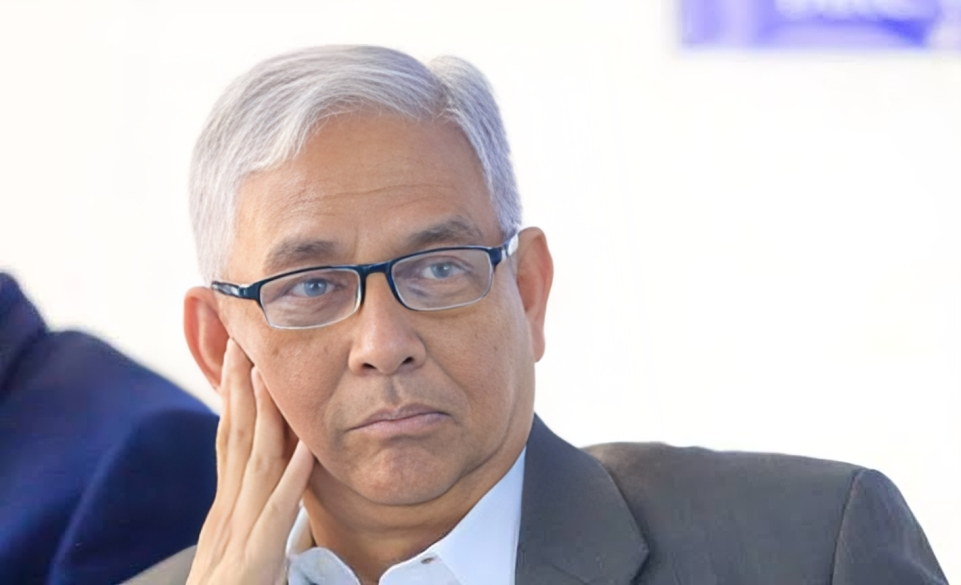
Bangladesh remains largely absent from international and regional discussions on capital markets and investment, former Bangladesh Bank governor Professor Mohammed Farashuddin has said, citing weak governance, lack of investor confidence and persistent policy failures as major obstacles.
Speaking as the chief guest at the prize-giving and closing ceremony of NeXTor 2.0, an inter-university real-time capital market competition held at East West University on Sunday, 14 December 2025, Farashuddin said that while stock markets in cities such as Karachi, Lahore, Mumbai, Bangkok and Colombo – and even in Bhutan – are regularly discussed at global forums, Bangladesh’s capital market rarely features in such conversations.
The competition was organised by the East West University Investment and Finance Club and drew widespread participation from students across the country.
Farashuddin highlighted what he described as a pressing challenge for policymakers: understanding why domestic savings continue to flow into the banking system, despite banks being under significant financial stress, instead of being channelled into the stock market. He suggested that this trend reflects deep-rooted concerns over trust and transparency in the capital market.
Referring to the nearly 70-year history of Bangladesh’s capital market, beginning under the former East Bengal government and continuing after independence, he noted that numerous initiatives had been undertaken to strengthen the Dhaka and Chattogram stock exchanges. However, he said these efforts have largely failed to attract sustained interest from the international financial and investment community.
Farashuddin also warned that the concentration of a large share of national wealth in the hands of a few individuals runs contrary to the ideals of the Liberation War and recent mass movements, making a well-functioning and inclusive capital market more important than ever.
Recalling the establishment of the Central Depository System (CDS) in 2000, he said political interference and a lack of trust caused the initiative to falter at an early stage, severely damaging market confidence. According to him, the biggest failure has been the inability to ensure independent, honest and fearless leadership in the governance of stock exchanges. Instead, individuals with questionable backgrounds were often given influence, further eroding trust.
Drawing comparisons with neighbouring countries, Farashuddin said they appoint qualified and independent directors with adequate remuneration, enabling them to take decisions with confidence and integrity. Bangladesh, he argued, has yet to demonstrate such firm commitment from either the government or the corporate sector.
Despite his criticism, he expressed optimism that one day the Dhaka and Chattogram stock exchanges would regain public trust. When that happens, he said, people would be willing to invest their surplus savings in the capital market, and international investors would also gain confidence in doing business with Bangladesh.
The NeXTor 2.0 competition saw participation from more than 260 teams and over 750 students representing more than 30 universities nationwide. Team FMV from Bangladesh University of Professionals emerged as champions, with Team NSUERS from the Department of Accounting and Finance of North South University finishing as first runners-up, and Team Singularity from East West University securing second runners-up position. The total prize money amounted to Tk205,000.
The event was attended by Acting Pro Vice-Chancellor of East West University Professor Dr Mohammad Ashik Mosaddik, while Mamun Rashid, chairman of Financial Excellence Limited and former chief executive of Citibank Bangladesh, was present as a special guest.