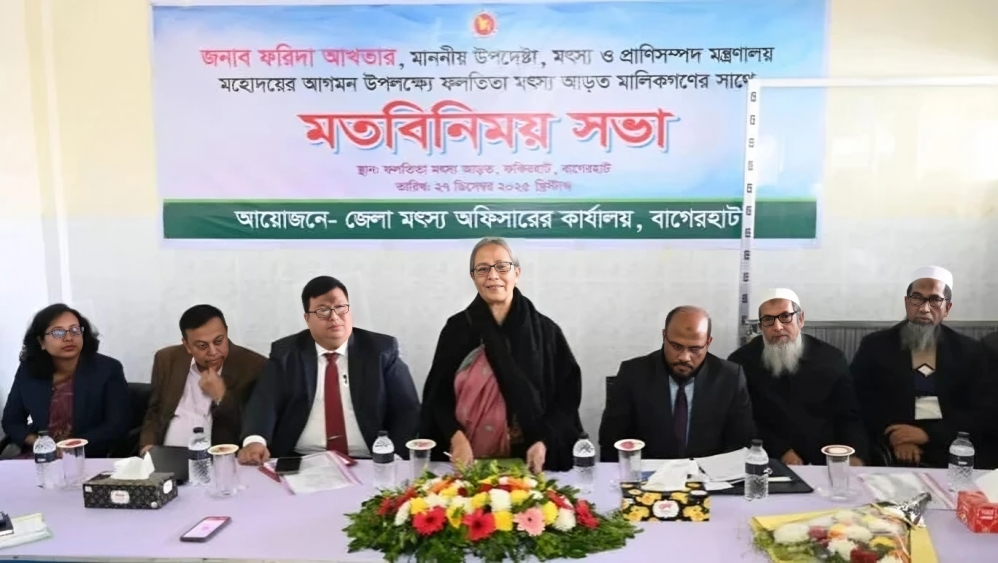
Fisheries and Livestock Adviser Farida Akhtar has stated that although Bangladeshi shrimp is widely recognised internationally for its taste and quality, sustained success in global markets will depend on strict compliance with international standards—particularly in relation to health safety, environmentally sustainable production, and antibiotic-free cultivation.
She made these remarks today (27 December) during a visit to the Faltita Fisheries Landing Centre in Fakirhat upazila of Bagerhat, followed by a meeting with warehouse owners, according to an official press release.
The adviser stressed that the illegal import of goods from abroad, including from India, as well as unauthorised internal transportation, is unacceptable. Such practices, she said, undermine government revenue, deprive traders of fair profits, and frequently result in goods being wasted—amounting to a direct loss of national resources.
Addressing the issue of electricity, Farida Akhtar noted that the fisheries sector does not yet receive the same level of subsidised electricity facilities as the agricultural sector. However, she said coordinated efforts among relevant ministries have been underway for the past year and expressed optimism that approximately 20 per cent electricity support for the sector could be ensured in the near future.
In response to a question, the adviser said the government would adopt a firm stance against those involved in the shooting of Inqilab Mancho spokesperson Sharif Osman Hadi during the election period. She added that, alongside the role of law enforcement agencies, responsible conduct by the public is also essential to reducing security risks. The government, she said, is taking all necessary measures to ensure the upcoming elections are conducted in a fair and secure environment.
Turning to the fisheries sector more broadly, Farida Akhtar remarked that Bangladesh has not yet been able to fully harness its potential due to systemic weaknesses. As legal restrictions are in place on collecting fish fry from natural sources, she said expanding the number of hatcheries is essential to increasing fry production.
She further noted that the shrimp export sector has suffered due to policy shortcomings under the previous government, adding that effective and timely measures would be taken to address existing export imbalances and revitalise the sector.